Tuesday, January 13, 2015

The land of humblebrag and its drunk, depressed, lazy, tumor-ridden, pig-bonking bureaucrats


In the American liberal compass, the needle is always pointing to places like Denmark
writes The New York Post's Kyle Smith (tack till Instapundit).
Everything they most fervently hope for here has already happened there.

So: Why does no one seem particularly interested in visiting Denmark? (“Honey, on our European trip, I want to see Tuscany, Paris, Berlin and . . . Jutland!”) Visitors say Danes are joyless to be around. Denmark suffers from high rates of alcoholism. In its use of antidepressants it ranks fourth in the world. (Its fellow Nordics the Icelanders are in front by a wide margin.) Some 5% of Danish men have had sex with an animal. Denmark’s productivity is in decline, its workers put in only 28 hours a week, and everybody you meet seems to have a government job. Oh, and as The Telegraph put it, it’s “the cancer capital of the world.”

So how happy can these drunk, depressed, lazy, tumor-ridden, pig-bonking bureaucrats really be?

Let’s look a little closer, asks Michael Booth, a Brit who has lived in Denmark for many years, in his new book, “The Almost Nearly Perfect People: Behind the Myth of the Scandinavian Utopia” (Picador).

Those sky-high happiness surveys, it turns out, are mostly bunk. Asking people “Are you happy?” means different things in different cultures. In Japan, for instance, answering “yes” seems like boasting, Booth points out. Whereas in Denmark, it’s considered “shameful to be unhappy,” newspaper editor Anne Knudsen says in the book.

Moreover, there is a group of people that believes the Danes are lying when they say they’re the happiest people on the planet. This group is known as “Danes.”
 
“Over the years I have asked many Danes about these happiness surveys — whether they really believe that they are the global happiness champions — and I have yet to meet a single one of them who seriously believes it’s true,” Booth writes. “They tend to approach the subject of their much-vaunted happiness like the victims of a practical joke waiting to discover who the perpetrator is.”

 … Denmark is a land of 5.3 million homogenous people. Everyone talks the same, everyone looks the same, everyone thinks the same.

This is universally considered a feature — a glorious source of national pride in the land of humblebrag. Any rebels will be made to conform; tall poppies will be chopped down to average.

 … One of the most country’s most widely known quirks is a satirist’s crafting of what’s still known as the Jante Law — the Ten Commandments of Buzzkill. “You shall not believe that you are someone,” goes one. “You shall not believe that you are as good as we are,” is another. Others included “You shall not believe that you are going to amount to anything,” “You shall not believe that you are more important than we are” and “You shall not laugh at us.”

 … Macho isn’t a problem in Sweden. Dubbed the least masculine country on Earth by anthropologist Geert Hofstede, it’s the place where male soldiers are issued hairnets instead of being made to cut their hair.

 … As for its supposedly sweet-natured national persona, in a poll in which Swedes were asked to describe themselves, the adjectives that led the pack were “envious, stiff, industrious, nature-loving, quiet, honest, dishonest and xenophobic.” In last place were these words: “masculine,” “sexy” and “artistic.”

Scandinavia, as a wag in The Economist once put it, is a great place to be born — but only if you are average. The dead-on satire of Scandinavian mores “Together” is a 2000 movie by Sweden’s Lukas Moodysson set in a multi-family commune in 1975, when the groovy Social Democratic ideal was utterly unquestioned in Sweden.

In the film’s signature scene, a sensitive-apron wearing man tells his niece and nephew as he is making breakfast, “You could say that we are like porridge. First we’re like small oat flakes — small, dry, fragile, alone. But then we’re cooked with the other oat flakes and become soft. We join so that one flake can’t be told apart from another. We’re almost dissolved. Together we become a big porridge that’s warm, tasty, and nutritious and yes, quite beautiful, too. So we are no longer small and isolated but we have become warm, soft and joined together. Part of something bigger than ourselves. Sometimes life feels like an enormous porridge, don’t you think?”

Then he spoons a great glutinous glob of tasteless starch unto the poor kids’ plates. That’s Scandinavia for you, folks: Bland, wholesome, individual-erasing mush. But, hey, at least we’re all united in being slowly digested by the system.


Saturday, April 19, 2014

A Business Deal That Threatened To Break Up a Government


There are groundbreaking business deals. And then there are ones that threaten to break up governments.
Thus spake Danny Hakim in the New York Times a few months ago.
When Denmark gave the global financial giant Goldman Sachs the go-ahead on Thursday to buy a stake in its state utility, the move was not exactly followed by a celebratory signing ceremony.

So divided was the Socialist People’s Party that it withdrew its ministers from the country’s governing coalition. Some party members said the deal ceded too much power to Goldman. Annette Vilhelmsen, the party’s leader [pictured below], who supported the deal, stepped down from her leadership role since she could not reach agreement within her party.

The party’s withdrawal from the coalition left the government of Helle Thorning-Schmidt [she of the Cameron/Obama selfie at the Nelson Mandela funeral, pictured above], the prime minister, with a tenuous grip on power.

That so many Danes have been aghast at the idea of giving Goldman Sachs a prominent role in the country’s energy future reflects how far the damage to the investment bank’s reputation has spread since the financial crisis.

However much the financial world might envy Goldman’s trading prowess, many Danes see Goldman as an emblem of an industry that helped cause the crisis and then profited handsomely even as much of the Continent still struggles to recover.
… The deal was approved … by a parliamentary committee. The departure of the Socialists left the two remaining parties in a precarious position.

 … But Prime Minister Thorning-Schmidt, who is best known internationally for her recent “selfie” with President Obama at the funeral of Nelson Mandela, said she would form a new government. 

 … Under the terms of the deal, Goldman would invest about $1.45 billion for an 18 percent stake in Dong Energy, the state utility, which has become a green energy exemplar in its push for electricity from wind turbines. Though the deal buys far from a controlling share, the minority stake would come with special privileges.

Thursday, October 17, 2013

36-Year-Old Dane on Welfare Since She Was 16: the "Danish model of government is close to a religion"


It began as a stunt intended to prove that hardship and poverty still existed in this small, wealthy country, but it backfired badly
writes Suzanne Daley in a New York Times article which states outright that the "Danish model of government is close to a religion here".
Visit a single mother of two on welfare, a liberal member of Parliament goaded a skeptical political opponent, see for yourself how hard it is.  

It turned out, however, that life on welfare was not so hard. The 36-year-old single mother, given the pseudonym “Carina” in the news media, had more money to spend than many of the country’s full-time workers. All told, she was getting about $2,700 a month, and she had been on welfare since she was 16.

 … Denmark has among the highest marginal income-tax rates in the world, with the top bracket of 56.5 percent kicking in on incomes of more than about $80,000. But in exchange, the Danes get a cradle-to-grave safety net that includes free health care, a free university education and hefty payouts to even the richest citizens. 

Parents in all income brackets, for instance, get quarterly checks from the government to help defray child-care costs. The elderly get free maid service if they need it, even if they are wealthy.

 … “In the past, people never asked for help unless they needed it,” said Karen Haekkerup, the minister of social affairs and integration, who has been outspoken on the subject. “My grandmother was offered a pension and she was offended. She did not need it.

“But now people do not have that mentality. They think of these benefits as their rights. The rights have just expanded and expanded. And it has brought us a good quality of life. But now we need to go back to the rights and the duties. We all have to contribute.” 

 … Joachim B. Olsen, the skeptical politician from the Liberal Alliance party who visited Carina 16 months ago in her pleasant Copenhagen apartment, is particularly alarmed. He says Sweden, which is already considered generous, has far fewer citizens living on government benefits. If Denmark followed Sweden’s example, it would have about 250,000 fewer people living on benefits of various sorts. 

“The welfare state here has spiraled out of control,” Mr. Olsen said. “It has done a lot of good, but we have been unwilling to talk about the negative side. For a very long time it has been taboo to talk about the Carinas.” 

 … It remains possible that the cost-cutting push will hurt the left-wing coalition that leads the government. By and large, though, the changes have passed easily in Parliament and been happily endorsed by conservatives like Mr. Olsen, who does his best to keep his meeting with Carina in the headlines. 

Carina was not the only welfare recipient to fuel the sense that Denmark’s system has somehow gotten out of kilter. Robert Nielsen, 45, made headlines last September when he was interviewed on television, admitting that he had basically been on welfare since 2001. 

Mr. Nielsen said he was able-bodied but had no intention of taking a demeaning job, like working at a fast-food restaurant. He made do quite well on welfare, he said. He even owns his own co-op apartment. 

Unlike Carina, who will no longer give interviews, Mr. Nielsen, called “Lazy Robert” by the news media, seems to be enjoying the attention. He says that he is greeted warmly on the street all the time. “Luckily, I am born and live in Denmark, where the government is willing to support my life,” he said.

Saturday, June 08, 2013

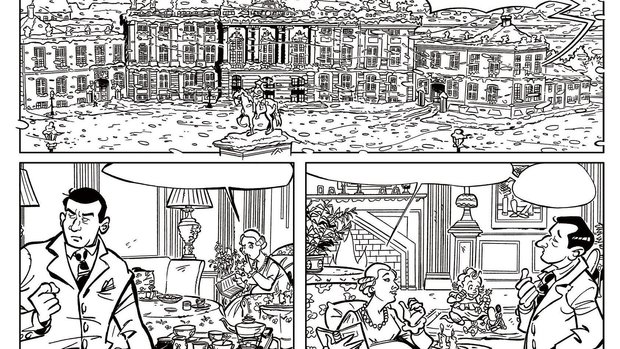
The Life & Times of Queen Margrethe II in Graphic Novel Format


Kristian Lindberg has an article in the Danish daily Berlingske Tidende about a new biography of Queen Margrethe II of Denmark in graphic novel format:

Dronning Margrethes liv bliver til en tegneserie

7.000 fotografier er en del af researchen på Thierry Capezzones og Erik Svanes tegneserie om Dronningens vej til tronen – og tiden derefter.

I 2015 fejrer Danmark dronning Margrethes 75 års-fødselsdag, men allerede til næste år vil regenten blive hyldet med en tegneserie i to bind, der skildrer hendes liv fra fødsel til i dag.

Bag serien står to meget erfarne tegneserieskabere, nemlig den 49-årige herboende franske tegner Thierry Capezzone, der blandt andet står bag tegneserien om »H.C. Andersen Junior«, og den 45-årige danske manuskriptforfatter Erik Svane.

Tegneserien om dronning Margrethe bliver i to dele, hvor første del, med arbejdstitlen »Daisy«, blandt andet handler om hendes fødsel, kort efter at Tyskland besatte Danmark, uddannelsesårene i Cambridge, hendes deltagelse i arkæologiske ekspeditioner og hendes ægteskab med prins Henrik. Anden del handler om tiden efter hendes indsættelse som regent i 1972.

»Dronningens liv er som et eventyr, men vi vil gøre alt for at få alle de historiske detaljer gjort så korrekte som muligt,« siger Thierry Capezzone.

For tegneren er serien om dronning Margrethe et skridt væk fra den eventyrprægede stil, som han hidtil har været kendt for. Han har foreløbig tegnet fem album om »H.C. Andersen Junior«, hvori den unge digter oplever sine egne mystiske eventyr i datidens Odense og København. Disse album har solgt i flere oplag i Danmark, Norge og Frankrig.

Alt skal være korrekt

Manuskriptforfatter Erik Svane har i mange år været bosiddende i Paris og leveret manuskripter til den store franske og belgiske tegneseriebranche. Blandt hans tidligere projekter har været en såkaldt kontrafaktisk biografi om Leonardo da Vinci, hvor man forestiller sig, hvad der kunne være sket, hvis de historiske rammer havde været anderledes. Hvad angår dronning Margrethe er forbilledet dog klassiske biografiske film som »Gandhi«, hvor der ikke gås på kompromis med det faktuelle.
»Alt skal være korrekt, men vi laver ikke bare en opremsning af facts. Vi vil koncentrere os om de dramatiske afsnit af Dronningens liv,« siger Erik Svane.

En rød tråd i fortællingen vil være at beskrive, hvordan Dronningen gradvist finder sig til rette med de pligter, der følger med positionen som statsoverhoved.

»Det har ikke altid været lige sjovt, og jeg tror faktisk, at det er en af årsagerne til, at Dronningen og prins Henrik faldt for hinanden - de har begge kæmpet for at finde deres plads i systemet,« siger Erik Svane.

Som et led i sin research har forfatteren rejst rundt i Danmark og taget omkring 7.000 billeder af blandt andet rigets slotte, fotos som Thierry Capezzone skal holde sig til under udarbejdelsen af sine baggrundstegninger.

Ideen

Ideen til en tegneserie om dronning Margrethe begyndte, da Thierry bemærkede, at hans tegnestil var begyndt at udvikle sig i en mere realistisk retning end den tegnefilmsagtige stil, som hans serie »H.C. Andersen Junior« er holdt i.

»Noget, jeg godt kan lide at tegne, er 1940ernes bilmodeller, og derfor fyldte jeg gadescenerne fra besættelsestiden med biler. Erik påpegede dog, at der på grund af benzinrationeringen kun var få privatbiler i gaderne. Folk cyklede mest,« siger Thierry Capezzone.

På trods af sin franske baggrund er tegneren i øvrigt overbevist royalist.

»Hvis man sammenligner kongedømmerne Danmark, Holland og Storbritannien med det republikanske Frankrig, så føler jeg selv, at kongedømmerne er at foretrække som statsform. Jeg elsker kongehuset og vil gøre mit bedste for at behandle det med den respekt, det fortjener,« siger Thierry Capezzone.

Tegneren og forfatteren har indgået aftale om udgivelsen med tegneserieforlaget Cobolt, der udgiver klassikere som Tintin, Linda og Valentin og Smølferne. Og snart også albummerne om dronning Margrethe. Redaktør på Cobolt Carsten Søndergaard ser de kommende album som et vigtigt skridt for danske tegneserier.

»I Danmark bør vi tilstræbe at fortælle danske historier i stedet for at lave efterligninger af amerikanske eller franske tegneserier, og de tegnere, der har gjort det, har også haft succes med det, som for eksempel Claus Deleuran og Orla Clausen,« siger Carsten Søndergaard.

På hjemmesiden hc-junior.dk/wordpress vil man kunne følge Thierry Capezzones og Erik Svanes arbejde med tegneserien.

Wednesday, April 03, 2013

Der er et yndigt land — The Parody

ThDubya has posted a parody of Denmark's Der Er et Yndigt Land (tak til Eiler).


Der er et yndigt land ("There is a lovely land") is the (civil) national anthem of Denmark. The lyrics were written in 1819 by Adam Oehlenschläger. When first published, the anthem had 12 verses, but this was shortened to the first, third, fifth, and last verse in later editions. The music was composed in 1835 by Hans Ernst Krøyer. Later, Thomas Laub and Carl Nielsen each composed alternative melodies, but neither of them has gained widespread adoption, and today they are mostly unknown to the general population.

Tuesday, September 11, 2012

François Hollande Channeling Kierkegaard

As François Hollande announces massive taxation, Le Monde's Plantu has the French president channeling Søren Kierkegaard…
• Hollande: "It is not the path which is difficult, it is the difficult which is the path" (Kierkegaard)
• Cynical French Worker: Alright already, I get the message!
 

Wednesday, February 01, 2012

Copenhagen: "a photogenic gem", filled with "old and new buildings that compliment each other perfectly"

Robert Thomason moved to Copenhagen to live with his Danish girlfriend nearly 10 years ago
writes The Telegraph.
He describes the city, which he has captured in thousands of pictures, as "a photogenic gem", full of "old and new buildings that compliment each other perfectly".

Sunday, January 08, 2012

Happy Birthday to Elvis, from… Denmark?!

A replica of Elvis Presley's Graceland estate is opening in Denmark
reports the BBC.
The Danish tribute to 'The King' has been built in the town of Randers, and will be known as Graceland Randers.

The building is almost identical to the original, although it is twice the size to house a shop, restaurant and museum.

The BBC adds that

The building is the brainchild of Henrick Knudsen, an Elvis fan who … said the project has the backing of Elvis's widow Priscilla.

Tuesday, June 21, 2011

Dziękujemy Prezydencie Ronald Reagan

"Ronald Reagan is a Polish hero" exults Janina, as she sends us the website that underlines the importance of celebrations which are to be organized in many Polish towns on June 27. You can also like the event's Facebook page.
The initiative in Poland commemorating the 100th anniversary of the birthday of Ronald Reagan … has been a civic action directed to all those who are close to the values​​ adhered to by President Reagan and who appreciate his undeniable contribution to the overthrow of communism and the recovery of freedom. Our goal is to pay homage and express gratitude to President Ronald Reagan, using the 100th birthday anniversary to remind public opinion in Poland of his character, his achievements, and his ideals, to which he was faithful.

We invite everyone to testify in the Memorial Book, which after closing will be printed and sent to the Ronald Reagan Library in the United States.

We invite institutions, associations, governments, businesses, media, etc. to take in their fields of activity of initiatives to commemorate the 100th anniversary of Ronald Reagan's birth. Remember that it is to a large extent thanks to Ronald Reagan that today we can enjoy freedom of association and civic activities, social and economic. All who choose to take any initiative, please let us know. We will inform, encourage and inform the media.

Tuesday, May 10, 2011

The West is acting out of fear, lest our conduct become grounds for fresh violence

…the President announced that he had decided not to release the dead jihadist's photo
notes Frank Gaffney, Jr.
As with the handling of bin Laden's burial, the justification given was concern that the picture's dissemination would only inspire more violence against us and our forces overseas. The truth of the matter is that the more we signal our fear of the violence of shariah-adherent Muslims, the more certain it is to be visited upon us.

Meanwhile, on Tuesday an appeals court in Denmark convicted one of Western civilization's most courageous defenders — Lars Hedegaard, president of the International Free Press Society. His crime? He gave offense to Muslims. Yes, that's right, a Danish judicial panel effectively enforced shariah blasphemy law. In the process, the court violated one of the most cardinal pillars of freedom: the right to free speech.

If allowed to stand, the ruling in the Hedegaard case will be used to abridge fundamental civil rights throughout Europe, and possibly far beyond. Yet, there has been remarkably little outcry about the defendant's plight - most especially from journalists who have as much to lose as anybody.

In this instance, as in the foregoing ones, the West is acting out of fear, lest our conduct become grounds for fresh violence. This is an enduring legacy of, among other things, the manufactured outrage and mayhem over the Danish cartoons a few years back. It gives ominous new meaning to the expression "Something is rotten in Denmark."

Unfortunately, our own judicial processes seem increasingly susceptible to Islamist intimidation, as well. …

… We need to stand up against shariah, not submit to it — at home or abroad. We must demonstrate that we are, to use bin Laden's term, the "stronger horse," by touting our victories and power, and not convey the opposite impression by obscuring or apologizing for them. And we must see the paperwork that precipitated the declination to prosecute CAIR and its Muslim Brotherhood friends — and then get on with putting them out of business.

Thursday, December 09, 2010

The Afghanistan Armadillo


Highly recommended:
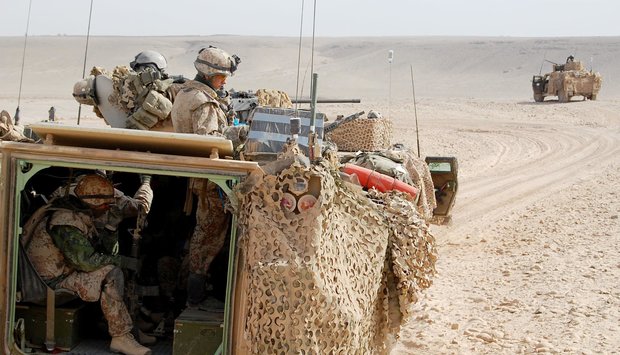
An intimate portrait of young, adrenaline fueled Danish soldiers stationed at Camp Armadillo, a base located in Helmand province in Afghanistan.

Thursday, October 21, 2010

Pipe Down an' Cool It

Climate catastrophe? The end of civilization as we know it? Cool It is based upon the book of the same name and lectures by Bjørn Lomborg, the controversial author of The Skeptical Environmentalist. Award-winning filmmaker Ondi Timoner travels the world with Lomborg exploring the real facts and true science of global warming and its impact.

Monday, September 27, 2010

The Danish Art of Hygge

The Danes have a word that's hard to translate, and no foreigner can hope to pronounce, but it's as Danish as pork roast and cold beer
we read in The Danish Art of Hygge (tak til Valerie).
It's hygge, and it goes far in illuminating the Danish soul.

… Gather the family and invite over a couple of good friends. Push the sofas and chairs up close to the coffee table. Douse the electricity and light some candles. Better yet, light a fire in the hearth.

Serve plenty of food and drink. Raise a toast or two, or three, and feel the warmth flow around the table. Look at each other until you see the candlelight shimmering in each other’s eyes. You've got hygge!

Luckily, we didn't have to use near-synonyms like coziness, fellowship, security, reassurance or well-being. They just don't add up to hygge. The whole is greater than the sum of its parts.

Monday, September 13, 2010

Say It Ain't So, Bjørn…

According to Hervé Kempf's interview of Bjørn Lomborg in Le Monde, the skeptical enviromentalist has become a dyed-in-the-wool proponent of global warming of climate change…

Update (from Radegunda in the No Pasarán comments section):
A few days ago, I read somewhere an email in which he explained to a concerned blogger (sorry I can't remember who) that he hasn't changed his views at all. It's just that his views had been misunderstood by the ideologues who tend to be enraged by any questioning of climate catastrophism--and who probably saw a propaganda coup in saying "Even Lomborg has come around ...."

Tuesday, August 31, 2010

Dans le pays réputé « le plus heureux au monde », Hells Angels, Bandidos ou Black Cobra s'entretuent

Dans le pays réputé « le plus heureux au monde », Hells Angels, Bandidos ou Black Cobra s'entretuent mais ont pignon sur rue et même des porte-parole
écrit Olivier Truc.
Ils jouent sur le racisme pour recruter les jeunes.
Son article dans Le Monde commence ainsi :
ppelons-le Nick, pour raison de sécurité. Il a un peu plus de 18 ans. Nick est un jeune Danois qui lutte pour sortir d'un engrenage où de plus en plus de jeunes basculent depuis quelques années au Danemark, ce pays scandinave qui passe pour « le plus heureux au monde ». Nick fait partie de ces petits soldats du crime, chair à canon recrutée par des clubs de motards ou des bandes issues de l'immigration qui, depuis l'été 2008, se livrent à une guerre qui a fait 9 morts et 87 blessés au cours de 140 accrochages.

Wednesday, August 25, 2010

Go, Denmark! Denmark to the stars!

If all goes well, in the very near future Denmark will become the fourth nation to put a man into space
writes Walter Jon Williams (tak til Instapundit).
The unique thing about the Danish rocket is that there’s no government money involved. The rocket is funded privately.

Tuesday, August 17, 2010

Sustaining a benevolent nanny state is proving to be challenging even for the notably generous Danes

…sustaining a benevolent nanny state is proving to be challenging even for the notably generous Danes.
For years, Denmark was held out as a model to countries with high unemployment and as a progressive touchstone to liberals in the United States
writes Liz Alderman in a New York Times article that appeared on the front page of the International Herald Tribune.
But now Denmark, which allows employers to hire and fire at will while relying on an elaborate system of training, subsidies for those between jobs and aggressive measures to press the unemployed into available openings, is facing its own strains. As a result, it is beginning to tighten up.

…“We have a famous flexicurity model, but now it’s all flex and no security,” complained Kim Simonsen, chairman of HK, one of Denmark’s largest trade unions.

Tuesday, July 27, 2010

The Happiest Nation on Earth: “Way too many Danes think ‘What’s in it for me?’ instead of considering what’s best for Denmark”

"…in light of the credit crunch and a growing public debt problem, Denmark’s generous public spending has come under scrutiny" writes Natalia Rachlin in the New York Times after referring to the country as "something out of a fairy tale: a place where social benefits are not just a last resort for the underprivileged, but an ingrained part of everyday existence, even for high earners."
Specifically, the state-funded pension program — which costs 96 billion kroner, or $16 billion, annually, an estimated 5.5 percent of gross domestic product — has fueled a discussion about the paradox of Denmark’s high earners receiving many of the same social benefits as the very neediest citizens.

“Way too many Danes think ‘What’s in it for me?’ instead of considering what’s best for Denmark,” Bendt Bendtsen, a member of the European Parliament and a former leader of the Danish Conservative Party, told the financial daily Boersen in a recent interview.

…Denmark has the highest overall tax burden of all O.E.C.D. member countries, with taxes to G.D.P. reaching 48.2 percent in 2009. Furthermore, numbers from the O.E.C.D. show that Denmark has one of the highest marginal tax rates for high earners — 67 percent — when consumer taxes are included.

“If you take away social benefits from high earners, it’s basically the same thing as taxing them even more heavily,” said Mads Lundby Hansen, chief economist at Cepos, a center-right research organization in Copenhagen. “The question quickly becomes, why stay in Denmark? And the thing is, we need high earners here to invest in businesses, to keep the economy rolling.”

…Mr. Hansen of Cepos pointed to calculations done by his organization, based on data from the Ministry of Finance and Statistics Denmark, that show that in 2010 the percentage of the adult population living entirely off transfer income — whether it be welfare, student checks or state retirement funds — is at 43.2 percent.

… “What Denmark needs is to get people back into the labor market,” Mr. Hansen said. “We need to boost productivity. This should happen in two ways: by major tax reforms, and also, slimming down social benefits across the board — not based on income.”

[Lars Bruhn, founder and chairman of NorthCap Partners, a major venture capital firm,] acknowledged that Mr. Bendtsen’s comments had started an important discussion about how to get Denmark back on track. But he added that any solution that amounted to increasing the burden on the country’s handful of high-net-worth individuals would be counterproductive — no matter how politically popular it might be.

“This will undoubtedly lead some business angels, those wealthy individuals who will invest in the next generation, to leave the country in order to avoid being a Dane – leaving behind what’s supposedly the happiest nation on earth,” he said.